Formulation2 min read
Why mixability matters as much as taste in a powder
A powder that tastes right but clumps, floats or settles will not get a second purchase. These are the properties that decide how a powder behaves in the glass.
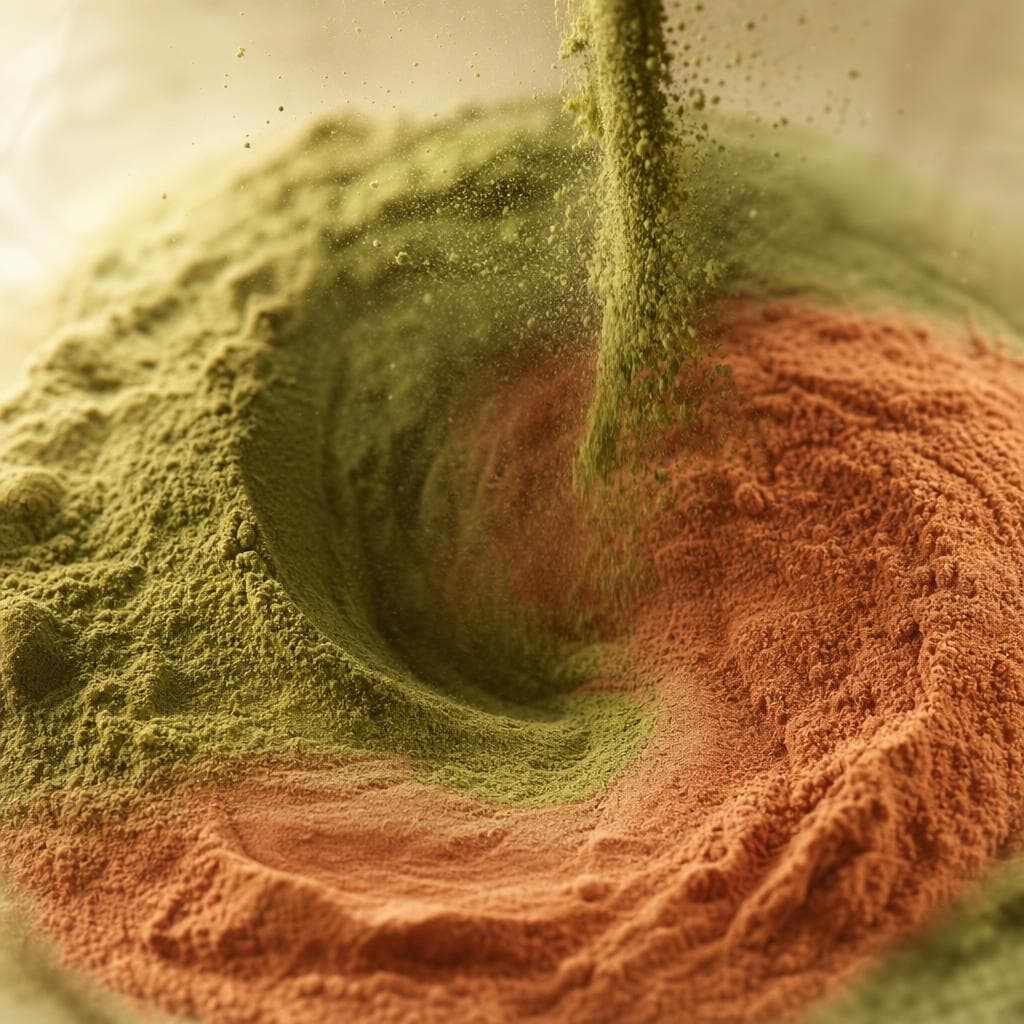
When a team evaluates a new powdered product, the first question is usually about taste. The second, which often decides whether a customer buys again, is how it behaves when it meets liquid. A powder that tastes right but forms lumps, floats on the surface or settles at the bottom of the glass is a product problem, not a minor detail.
What "mixability" actually covers
It is not one property but several that happen one after another:
- Wettability: how quickly the powder gets wet when it touches the liquid. Fine, fatty or very hydrophilic powders can form a wet outer layer that keeps the dry core from getting wet. That is how lumps form.
- Dispersibility: how easily the particles separate and spread through the liquid instead of staying in clusters.
- Solubility or suspension: whether ingredients dissolve, or stay evenly suspended long enough to drink.
- Foaming and air: some proteins and ingredients trap air when shaken, which changes mouthfeel and appearance.
Why it is a formulation question
Mixability does not come from one ingredient. It comes from the combination:
- Protein source and level. Different proteins hydrate and foam differently, and high protein levels make the powder more demanding to mix.
- Fibres and hydrocolloids. They can thicken a drink, which may be wanted, but they can also swell too quickly and form clumps.
- Fats and oils. They affect wettability and how the powder flows, and they are sensitive to how they are incorporated into the blend.
- Particle size and density. They affect how the powder pours, wets and disperses.
How we check it
At the bench, we do not only taste samples. We prepare them the way your customer will: in the same type of container, with the same liquid at the same temperature and with the same effort. We look at lumps, time to disperse, foam, sediment after standing and how it feels. Then we adjust the formula and repeat.
What to tell your formulator
How the product is prepared matters as much as what is in it. Say whether it is shaken or stirred, hot or cold, with water or milk, and how patient you expect the customer to be. A powder designed for a shaker bottle may not be right for a spoon and a cup.
If you have a powder that tastes right but does not mix well, that is a good brief to start from.